


|
|
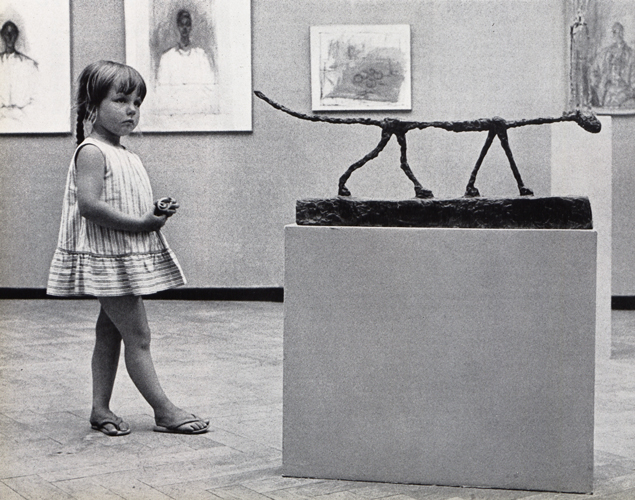
“The Cat”, a 1955 Giacometti bronze sculpture. |
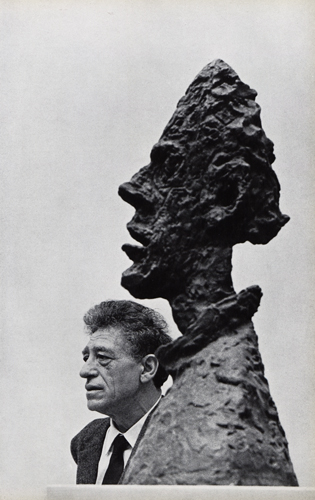
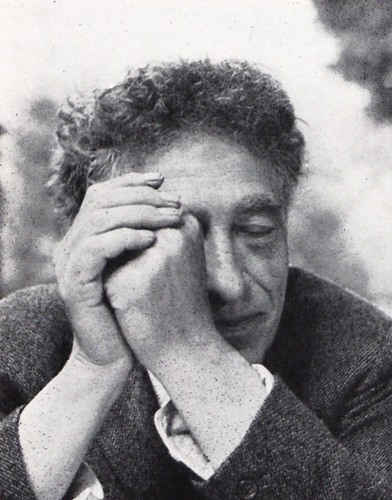
To many viewers, Giacometti’s “heads” seem to be a long gallery of self-portraits. |
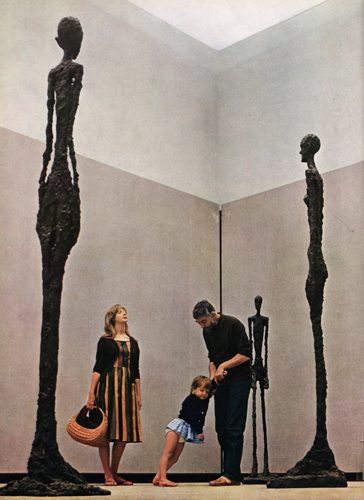
These tall Giacometti silhouettes appear to elongate the space around them and to subject it to a precise rhythm. |
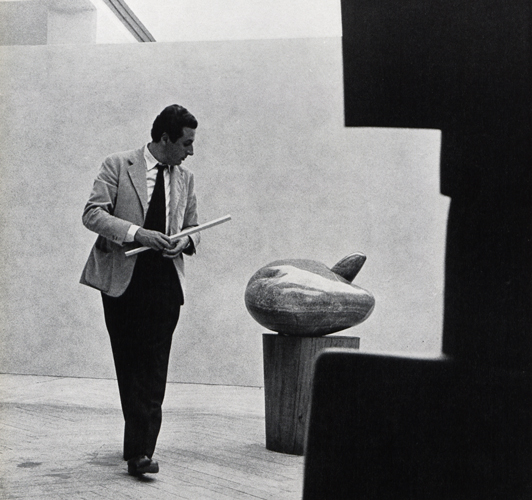
Arturo Carmassi started sculpting only a few years ago. After his use of bright colours and of inventive, lively and vigorous shapes as a painter, through this new experience he commits to going deeper, rigorously questioning his own mode of expression. |
|
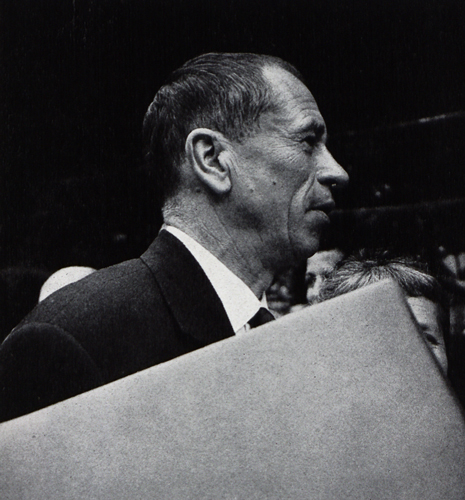
|
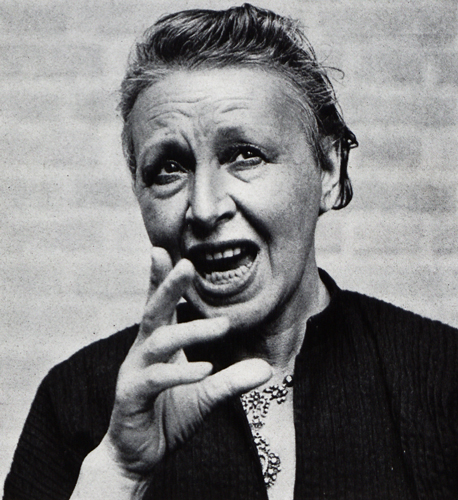
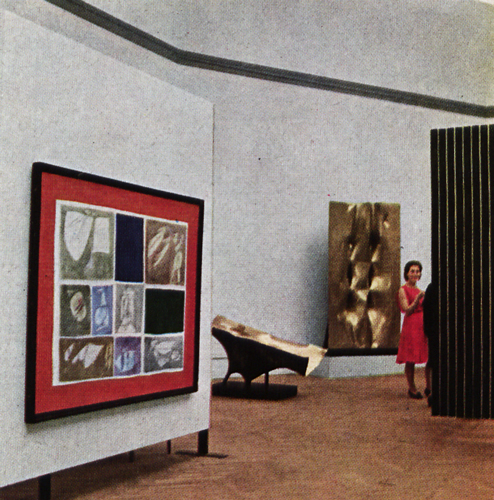
Louise Nevelson laughs, talks and almost shouts at times, while explaining her shocking work in the three white, golden and black halls of the American pavilion. It looks as though her tall figure and boisterous personality can barely fit among these assemblages of chair legs, small pillars, frames, crates, etc. |
|
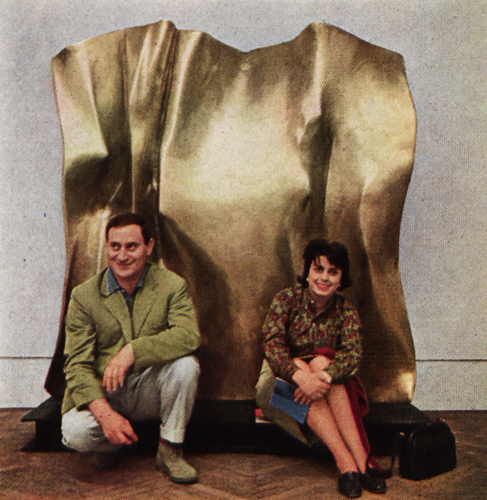
Giò Pomodoro sitting with his wife in front of a sculpture. Evident in his jewels, his refined taste for materials is transformed here into a vivid sense of space, creating surfaces in which shapes unfold uninterruptedly. |
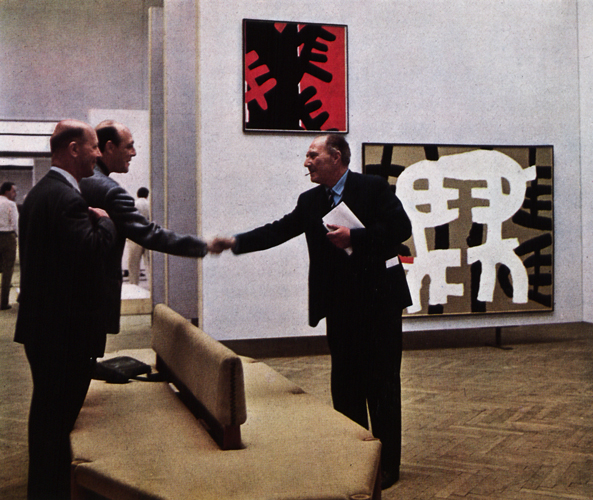
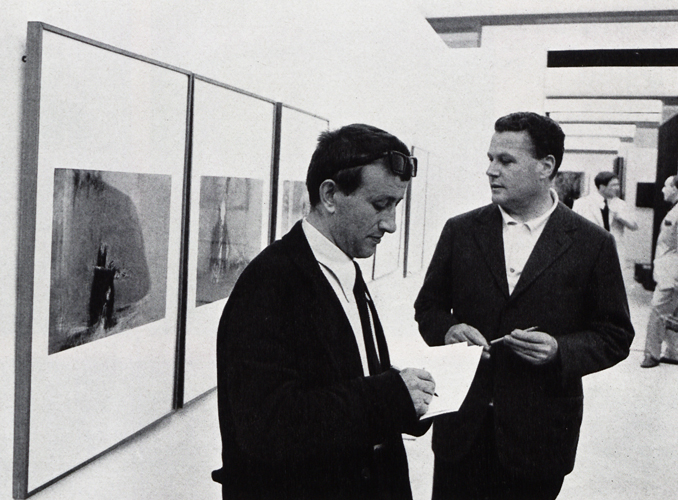
Giuseppe Capogrossi receives the Grand Prize in the Italian Painter category together with Ennio Morlotti. This officially acknowledges Capogrossi’s long-lasting and patient study of his own poetic truth. In this photo painter Dorazio congratulates him. |
|
|
|
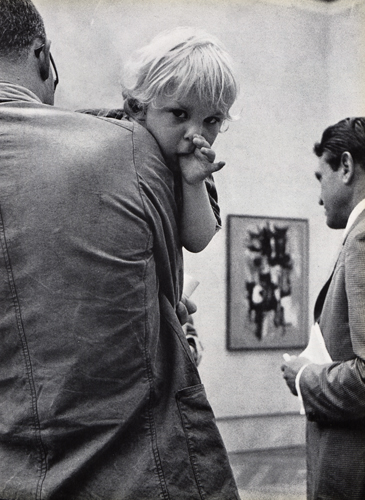
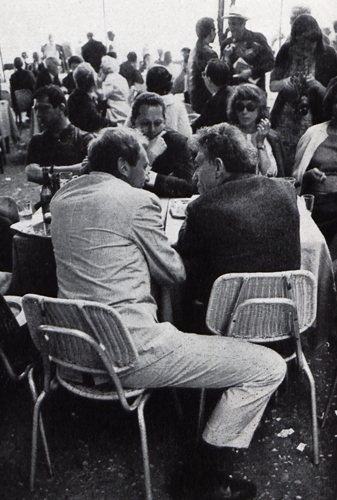
This is Ugo Mulas’ end to a long day at the Biennale Pre-opening. |
N° 4, 1962
Biennale conversations